

Dennougumi.org is your leading English-language fan resource for the Japanese media mix title, Akihabara Dennō Gumi. This site is currently under construction.
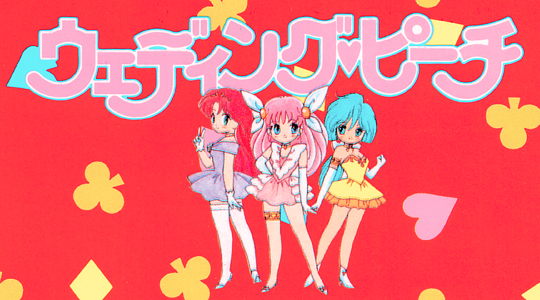
 Akihabara Dennō Gumi (Cyber Team in Akihabara) is a 26-episode anime series from 1998 with a 1999 film sequel, Akihabara Dennō Gumi: 2011-nen no Natsuyasumi. Originally pitched as a broader media mix, it spawned a few spin-off products and held a grip on popular anime magazines during the 1998-1999 year, but ultimately faded from the public consciousness with little fanfare.
Story
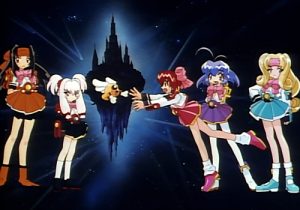
Set in an alternate 2010, the series follows twelve-year-old Hanakoganei Hibari, who lives in the vibrant technological hub of Akihabara. Hibari longs for a popular digital pet toy called Pata Pi and unexpectedly receives one from a mysterious prince who appears to her in a vision. She names the toy Densuke, but it is quickly targeted by masked villains hellbent on obtaining it for unknown purposes. Densuke defends Hibari by transforming into Aphrodite, a powerful, giant mobile goddess known as a Diva.
Soon, Hibari’s classmates find themselves and their Pata Pi drawn into a battle that threatens not just Akihabara, but the future of humanity.

Background
Originally pitched as DENKI FRIEND Pata Pi!, the series was designed for young girls and families, aiming to sell simulation toys and games (presumably utilising the Pata Pi in a Tamagotchi-esque manner). It’s unclear when the focus shifted, as early promotional material for the anime (now called Akihabara Dennō Gumi) still featured the cute Pata Pi and cheerful heroines, similar to the initial pitch. However, when the first episode aired and Densuke transformed into Aphrodite, it became clear the show was taking a different direction.
The series turned out to be a stealth “henshin heroine” title, with the Pata Pi being the ones that transform. The anime also featured frequent, jarring depictions of the heroines’ underwear and the large, bouncing breasts of the villainesses. As the episodes progressed, the series revealed a darker, more complex core. Despite its occasionally off-putting elements, the show’s underlying mythology and the heroines’ trials were both grim and hopeful, making it a fitting, if unconventional, choice for TBS’s 5 pm Saturday time slot.
Given its notoriously low-quality animation (with episodes reanimated for home video release) and mismatched visual and thematic elements, it’s no surprise that Akihabara Dennō Gumi hasn’t maintained lasting popularity. However, for those who grew up watching reruns on Kids Station or Latin American TV networks, the show is still fondly remembered. While it may be more obviously imperfect than other works from its era, there is an enduring charm in its ambition and unique approach that continues to resonate with viewers today.
Resources used
Information on the original Akihabara Dennō Gumi pitch comes from this auction for pre-production materials and Oguro Yuuichirou’s personal X/Twitter account. The TV/Movie Official Mook provided additional details regarding episodes and airings.
Dennougumi.org is your leading English-language fan resource for the Japanese media mix title, Akihabara Dennō Gumi. This site is currently under construction.